Monday, July 31, 2006

My Beloved Father Edmund


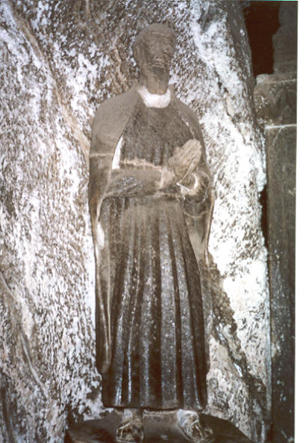
I met St. Edmund on Ender’s Island, Connecticut. To be more accurate, I came across his arm. I was attracted by the gentleness and beauty, the long, slightly curved fingers and the delicate bone structure of the hand. I marveled at the thought that a hand can tell so much about a person, because I was immediately aware of St. Edmund’s presence. I was struck by the sense of peace and loving interest in my hurts and fears. His island, possibly like his other resting place, the Abbey of Pontigny in France, is a place of beauty, peace and refuge for the burdened spirit. After observing many emotional healings in the families and people who visited the island, I became aware that there was a great saint interceding, humbly and quietly, without recognition- a great lover of Our Lord and Lady.

In preparing for this icon, I researched the life of St. Edmund. I felt the hairs stand on my neck as I met the same man in words as I met in spirit on Ender’s Island. His titles: Peacemaker, Father of Poor and Afflicted Children. Thus the icon shows St. Edmund interceding for one of his poor and afflicted children, encouraging another to reach out in charity.

St. Edmund was born in England in 1174, a contemporary of St. Francis of Assisi. He was primarily a man of prayer, and then a scholar. He became a priest, then was pulled up through the ranks of the Church until he occupied the Archbishopric of Canterbury, at that time, the second highest place in Christendom. Like his saintly predecessor, St. Thomas a Becket, he was forced into exile by problems of politics. On his landing in France, he blessed a young prince who would become the future King and Saint Louis. He was not a politician, but a saint, who loved his neighbor. He was not a worldly man, but made his decisions based on the justice and love of God and thus he failed in politics. His life was like a perfect mold of the beatitudes. I take many quotes from the beautiful biography of St. Edmund, Edmund Rich : Archbishop and Saint, by M.R. Newbolt (first published in 1928). I give here examples of a few of the beatitudes:

Blessed are the poor in spirit: for theirs is the kingdom of heaven.

“One might subtract everything else from him — all his gifts of learning and the powers of leadership which carried him from the position of a poor scholar to the Primacy of England — and still, by virtue of those long hours spent night after night in solitude before our Lady's altar, he would remain a saint, retaining what is essential in his character.”

Blessed are the meek: for they shall posses the land.

“Rather he knew that it becomes the servant of the Lord to suffer. "Eadmundum doceat mors mea ne timeat" ran the legend on his seal. It was Becket's martyrdom which pointed to him the true way to victory. He would strive till he could strive no more, yield till he could yield no further without sin, endure to be browbeaten, humiliated, flouted, and disillusioned, and then, since Henry was no tyrant to give him the glory of martyrdom, he chose the humbler self-immolation of retirement.”

Blessed are they who mourn: for they shall be comforted.

“For saints are unaccommodating people, excessively inconvenient to live with in an evil world where Christian principles have to be elastic if they are to square with politics and economic laws...(my sic). We get the impression of a gradually growing sickness of heart, a progressive agony of resistance to forces which he could neither make alliance with nor overrule.

Blessed are they that hunger and thirst after justice: for they shall have their fill.

“As a bishop he stood for the very highest ideals of the churchman ; he is in the true succession of saints of apostolic life who ruled the flock of Christ, not from ambition nor for filthy lucre, but as a true shepherd, ready if need be to lay down his life for the sheep.”

Blessed are the merciful: for they shall obtain mercy.

“When according to the law he received a "heriot"—that is, the best animal from the estate of a deceased tenant — he always listened to the natural complaints of the widow. " My good woman," he would say, speaking to her in English, "this is the law of the land, and custom demands that thy lord should receive the best animal which thy husband had when alive." Then turning to his retinue he would say in French or Latin, "Truly this law was invented by the devil, not by God. After the poor woman has lost her husband, the best thing her dying husband had to leave her is taken away." He would then say to the widow in his mother tongue, "If I lend you the animal, will you take good care of it for me?" Thus the requirements of the laws of man and God were satisfied, at the expense of the archiepiscopal estate.”

Blessed are the clean of heart: for they shall see God.

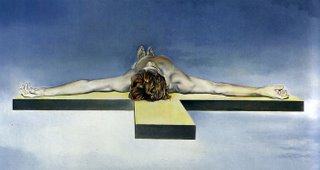
“He was seen to wash with wine and water the marks of the five wounds on his crucifix, then, making the sign of the cross over these ablutions, he drank them with great devotion saying the words of Isaiah, " Ye shall draw water with joy out of the wells of salvation." His love for the image of the Crucified was notable throughout his life, and in the history of Christian devotions this practice of his was famous in the development of the cultus of the Five Wounds, which finally crystallised into devotion to the Sacred Heart, in which the spear made the chiefest of the wounds of Christ.”

Blessed are the peacemakers: for they shall be called the children of God.

“We too need scholarship allied to sanctity, and our generation, like his, is overwhelmed with an access of fresh knowledge which requires to be assimilated by religious thought, and is assailed by an epidemic of unbelief which only doctors of the faith can conquer.”

Blessed are they that suffer persecution for justice's sake, for theirs is the kingdom of heaven.

“The world being what it was, and he possessing the character he did, no other result of his life was possible, for, as has been said, he is one of those whom our Lord sends as lambs into the midst of wolves, and the wolves of his day were hungry and formidable. He may not have combined in equal proportion the protective wisdom of the serpent with the harmlessness of the dove, but no tact or subtlety could have evaded the issues he was called to face.”

St. Edmund of Canterbury, to me, is a saint akin to St. Joseph: a true father, gentle and loving, but never losing sight of the truth. His life gave a perserverant and humble glory to God.

Sunday, July 23, 2006

Enclaves of Heaven


Shaw Island, part of the San Juan Island chain in Puget Sound, is truly an island from regular suburban or city life; even more so than the other islands in the chain. Shaw makes Orcas Island look like a hopping metropolis.

We traveled over on the ferry from Orcas to Shaw this morning because we were looking for a reverent Mass, and hoping that the Mass at the Benedictine Monastery on Shaw would be just that. Part of the charm of these islands is that they are like small countries unto themselves, complete with mountains and farmlands tucked in between the boundaries of the blue, cold water. The monastery is in one of these farming areas; a quiet, gravel-crunching turn under a wooden archway, with a large rust-coloured Benedictine cross melding into the red and brown trees. Along the road cows, llamas, peacocks, chickens and wheat are growing and living silently under the resplendent sunlight of a Sunday morning.

The first good sign is that a nun barrels by us in an ancient red Subaru, in full work-habit with a blue and white bandana tied like a pirate’s over her headpiece. Coming in from haying, she is hurrying to change for Mass. The chapel is the second good sign, for it is lovingly built- how can one see that? The straight lines of the roof, the carefully allowed moss on the Japanese-style gate, the trimmed bamboo reeds, the small touches here and there of both beauty and sturdiness. It is a strange combination, this San Juan-style-sturdy(pine logs and cedar siding) and the beautiful Oriental décor and garden: but somehow, it fits together: the whispering of the wind in the pines and the green, sleepy sound of the water flowing down a rock into a carefully placed pool; the island rocks placed in the cracks of the slate path, but island rocks polished to a beautiful sheen, little tiny works of art; the off-center apex of the building held aloft by a rugged pine log, left in it’s natural but shaven state- off-center in a stance of demure, subtle reverence to the altar which becomes the focus of the space rather than the building itself.

The Benedictine sisters come quietly into the cloister area of the chapel, behind a transparent grille of bamboo, and begin to sing: we look at eachother in gratitude, because it is a beautiful, simple, “Asperges me…” and the Mass begins. The quiet reverence of a Novus Ordo Missae said the way it was promulgated, complete with the priest facing the East- ad orientum-the worshipful rythym of a people looking towards the Lord with one another.

I was thinking about this, this quiet enclave, the beautiful farm with its centerpiece this little piece of heaven, and wondering how we all present got to this beauty, this intersection of ourselves and Our Lord, on this small island in the more or less pedestrian State of Washington. How can I describe these moments, whether you are in a little town in New York, or Mexico, or a makeshift altar on pilgrimage? They are moments where you look around gratefully to the serious, reverent neighbor, the wise, sacrificial and quiet-spoken priest, the plaintive air of the Gregorian chant, and the air becomes heavy with the supernatural, as if the Lord sees the feeble human attempts to worship Him and gently turns His gaze our way, filling us all in ways unspeakable.

For myself, I was thinking about this miracle, and then the Old Testament was read: “ I Myself will gather a remnant, I will shelter them in a good land, I will be their Shepherd.” I thought of how the Lord Himself grants the enclaves, the tiny pockets of real worship, real life, in the midst of the Ellulian flight from Him that is the world.

I was thinking about the small number of nuns and their age, I was thinking in a worldly way about the survival of this place with the lack of vocations; for most people cannot even see this place, they hear its name, perhaps, and look no further- for they are not looking further than convenience or of ‘uplifting service’. I myself fall into this convenience thinking very often.

I was wondering about the mystery of these small enclaves of heaven, compared with the busy, alternating current of suffering and entertainment of the world. But I was, again, thinking in a worldly sense.

But these enclaves are the Lord’s, it is His will that allows them, grows them and leaves them in the hands of His creatures: they remain His. When we ignore them, or do not look for them, we are poorer and we are culpable.

As we left, the little valley spreading below the road, I saw a peacock sitting majestically on the balcony of the nun’s house, across from the barn. As he spread his wings and moved in his silvery, slow way, I was forcefully reminded of the loss of Eden- and the Deep Beauty that must have been there. It was the combination of the light, the reverent Mass, and the Presence of God that made me see an ordinary day as a slice of Paradise. It was a grace.

If you seek, you will find.

Monday, July 17, 2006

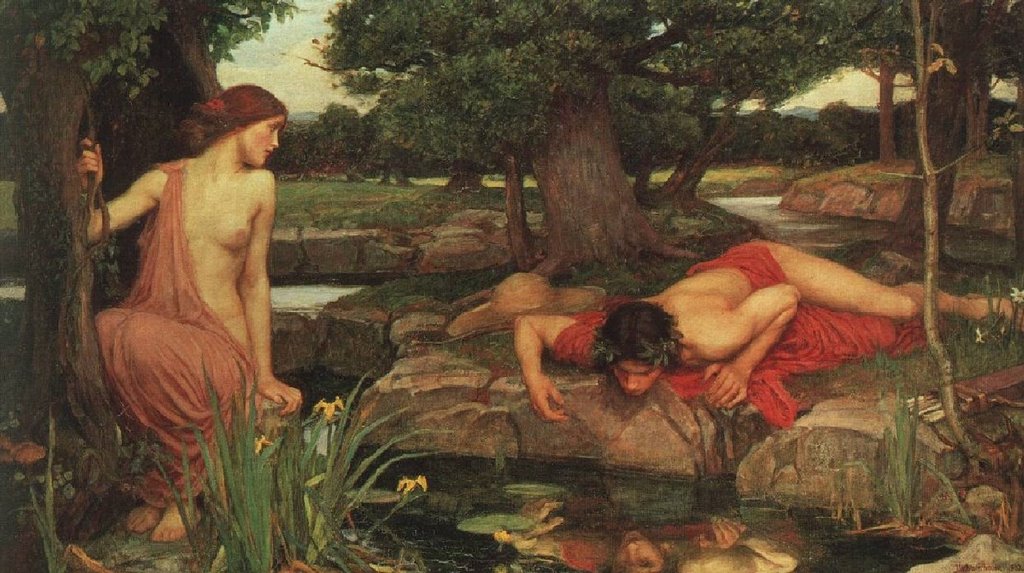
The Cure of Narcissism


She waited there, by the sandy window ledge, as the clouds beyond the desert mountains caught the last light like white cloth hung behind the oil lamps. The darkness of her unbound hair covered the side of her face as she leaned down on one arm, still attending the glorious colours of evening; she mused that it seemed the world was underwater, and that somehow this glorious sky was the real land, that the heavens that caught light were somehow like the glowing shore surrounding the blackness that was the fallen world.

As she focused on a certain cloud sculpture, her peripheral vision seemed to catch a movement in another part of the sky, like a sudden whirlpool in water. The next instant she felt a presence at her back, and she peeped out from under the strands of hair as slowly as she could. She felt a sudden rush of fear, and love, and glory, as if indeed all the beauty of that sky had pulled itself together into a person, who was now addressing her: “Hail, O Full of Grace, the Lord is with thee”.

Immediately she got herself turned around, still in a half-sitting position. Her face became white, even in that soft pink light of sunset; and any admiration or fascination she might have entertained on this creature’s behalf was immediately stifled by both her awe and outright fear, and also by her habitual practice of looking for the unknowableness of the Lord. She was not distracted by earthly beauty- and even this unearthly beauty could not entice her to want it for herself. She was afraid because she did not know who this was or what this meant for her soul.

Gabriel, or Power of God, knew all this about the young woman humbly looking at the floor, and so he said gently, “Be not afraid, for the Lord has found favor with thee.” She did not speak, but waited. The angel continued, and each word seemed very heavy to the young woman, a heaviness of massive, bright diamonds. She had to take in each syllable, and they almost hurt because of their immensity, as if they were actual physical things. He said, “Behold thou shalt conceive in thy womb, and shalt bring forth a son; and thou shalt call His name Jesus. He shall be great, and shall be called the Son of the Most High and the Lord God shall give unto Him the throne of David His father; and He shall reign in the House of Jacob forever. And of His kingdom there shall be no end.”

The corners of the room were darkened, but between Mary and the Gabriel there was a strong focus of all the light in the heavens. She looked up with a mixture of timidness and holy, solemn joy, her faith in the power of God already evident in her features: “How shall this be done, because I know not man?" The question had come from a heart lost in the mystery of God, a heart lost in the highest love, a love of passionate, loss-of–self humility and sacrifice. A heart like unto God, because He had filled her with His grace and prepared her for this moment and all others after. A helpless creature’s heart, but one He had transformed into a vessel of supernatural beauty, a heart inflamed with all loves coming out of the fiery furnace of charity, like the rays of the sun.

The angel inclined his glowing features a little, and lifted his hands: "The Holy Ghost shall come upon thee and the power of the Most High shall overshadow thee. And therefore also the Holy which shall be born of thee shall be called the Son of God.”

Mary tried to take in all these words. But she only understood them in the realm of her soul which is beyond words, the part of all of us that simply trusts God. In that realm, she was pondering a real question of love, but from One Whom she could not see or know in the way a maiden expects to know before acceptance. In the place beyond words, however, she’d lived in prayer for most of her young life; she had waited, a servant of the Living God, she had practiced virtue and forgot her self in contemplation of the beauty of the Lord as she understood Him in a myriad of ways. Here was no selfishness, no errant sensuality, no thought of a place in the world at all: only room for a clear, pure stream of servanthood that was fashioned by the Lord Himself, unbeknownst to the object of His grandest plan. In that silence-full place, Mary’s answer had been formed over all the hundreds of days that comprised her life to this point: "Behold the handmaid of the Lord, be it done to me according to thy word."

Each day thereafter, her life was that answer, over and over, from the long journey to Bethlehem and the cave, to the Holy City and the Cross, to the Empty Tomb and the Upper Room of Pentecost. She was, and is, a true Echo of True Beauty: and she calls in full tones the rest of us to the cure of narcissism.

Narcissus’ true sin was to miss True Beauty and put something, a reflection of himself, in the place of God. The genius imbedded in the naming of the nymph, “Echo” is multi-layered: Echo not only provides Narcissus with more of his own reflection in a symbiotic relationship, she also, like the echoes, or ripples from a splash of water, spreads the narcissism into a society. Narcissus can be renamed Nemesis, or inverted image, for he is symbolic of the fallen part in all of us that wishes to invert the image of God in ourselves into a self-image. This is idolatry, plain and simple, and wreaks havoc upon the world, because it destroys and absorbs others into itself like Echo. It is like a virus, numberless absorbent selves trying to remake creation in their own creature image.

True Beauty once walked in Palestine, and His Echo was Mary. He is the only one with the right to love His own image in others, for He created them all, and Him loving Himself is, by its essence of Charity, loving the other and transforming them into true beauty. He is the Source of Love. Real love begets love and builds up on a strong foundation; and selfishness begets selfishness and destruction.

The cure for narcissism, both on a personal and cultural level, is not a thing like a pill or a method or a social program- it is a Person, the Person of Christ. This sounds like an unattainable answer until we understand the true role of religion (Latin, to tie). Like the weaving of a net which pulls men to safety, religion slowly and surely ties us to the Person of Christ: and if it is true religion, it does not bind into selfishness, but into the freedom of a disciple and a slave of Love. This slavery is joy, this discipline is gratitude and celebration, and ultimately freedom from the pit of living for self.

The daily practices, the examples of those who have gone before heroically (the saints), the architecture, the liturgy, the prayer books, the hierarchical nature of the Church, the different members of the body both clerical and lay, the chant, the spiritual direction, the holy education: all these little pieces work together to form a religion that ties one to the Person of Christ- or, if it is a man-made religion and thus false, again to self. These pieces must all work together, they must be informed by the Person of Christ in order to lead back to Him. That is why these seemingly small things, like prayer books and liturgical norms, are so very important. They become like the individual ropes of the net; if one of them is weak, many fish will fall back to the sea of destruction.

It is, of course, not left to chance that Our Lord used the parables pertaining to the fishing barques, the nets, and the fish. In His choice of First Apostle, He chose a master fisherman. It is also no accident that in mystical writing, the Church is called 'Peter's Barque'. The sea is murky and a dangerous place for fish, but they cannot see this at all, being unable to survive anywhere else: they are helpless as prey. The fisherman lowers his net, and is careful to lower a mended one, lest his work be in vain; and he pulls in a catch ordained by forces greater than himself. In pulling the fish out of the water, he is putting them in a position to die- they will no longer be fish, but in order to be born to a new life, they must come into the fisherman’s boat and die to self. The more resistant may jump out, but those that die will be changed in the confines of the boat, they will begin to become new creatures in Christ, creatures meant for heaven.

Narcissism, which is really just a precursor to hell, is cured by a death to self and an infusion of supernatural charity. This is brought about not usually by a single act of extraordinary grace from God, although this does and can happen. The most usual way, nonetheless miraculous, is through accepting the net of true religion, in order to be brought into Peter’s Barque, in which the Lord is waiting to transform us into fires of charity(Religion is like a slow-motion miracle). When we finally become Echoes of Truth, rather than of self, we can begin to transform the narcissistic culture we live in.

Sunday, July 09, 2006

The Culture of Narcissism


Part Two of three

Most of us, without knowing it, swim like tadpoles in a sea of narcissism. We grow up, absorbing the public school culture, the TV, the movies, the news, the street culture in modern Western life. We are formed, in large part, by the seemingly random and existential accidentals around us: and they form us more deeply the less we are aware of their presence.

We are the child who sits watching a Disney movie of a young woman who strives to break the bonds of natural authority in order to plant her image on the world around her; we are the middle school student who suddenly realizes that in order to matter to our peers, we must conform by asserting ourselves with the clothing we wear (which, by the way, ends up looking as a facsimile of the clothes that everyone else is wearing). We are the teenager who knows nothing of the word vocation and ‘lives for the weekend’- a weekend of trying, via some substance or another, to reach intimacy but never to build true friendship. We are the young adult on a gap year, feeling that the loss of identity in the midst of a European twilight is somehow our right; and we are the twenty and thirtysomethings, feeling the weight of new responsibility as if it were meant for someone else, and not really seeing the importance of it beyond what it means for us, as an ‘autonomous individual’. We are the middle-aged sixties washouts who cannot commit to anything, because it threatens our boundaries of surface happiness: and it directly threatens our false view of ourselves as loving individuals. We are the citizen who cannot see that our own secular government, founded on deep pluralism, can and does commit evil (although even a numbskull free of narcissism could put that together). We are the adults who cannot think for ourselves, or think abstractly, because the culture we live in does not produce freedom, but rather narcissists and their symbiotic Echoes.

In the fifties, a Muslim cleric named Kutu came to the United States to study our school system and lived in a small American town. He came to a devastating revelation: even in the American heyday of law and order, the philosophies of radical individualism would produce a people who could not see beyond themselves; they would become selfish, to the point of seeing reality in the image of themselves- and that this was the great danger of the future to his fellow Muslims.

In time, Kutu himself became unattached to reality, in that he was the founder of a radical group of Muslims who came to the (ironically) rather narcissistic conclusion that they were allowed to kill anyone who didn’t practice the faith the way they did. However, amongst the false religious views producing fanaticism were some valid observations. At the time of his American sojourn, Kutu was an educated, moderate Muslim: he was a religious man, who understood something correct and fundamental: that the truly religious person could not be selfish, and that selfishness (narcissism) can be cultural and not just an individual problem. He saw the devastating effects that narcissism, or radical individualism, would produce on a culture at large: it would destroy the ability for people to have faith.

The Latin root of religion is religare, which means “ to tie”. In religion, which is the way in which we practice our faith, we are tied to God: we are obedient to Him, we are the feminine soul in relation to the Creator, the I to the Thou, face to Face. A truly religious person is in the process of forgetting self, or "losing one's life to gain it (in Christ)". But a radical individual, one who “has the right to create the universe as he or she sees fit” (paraphrase from Planned Parenthood vs. Casey) becomes fundamentally a narcissist. And when our own Supreme Court makes statements anywhere close to the one paraphrased above, we have a narcissistic culture. We begin to lose the very ability to see beyond our own image to the other, most importantly to the most Other, God. We cannot think in terms of abstraction, or principles, or faith, because everything is immanentized, everything is reduced to Descartes’ “I think therefore I am”- or the modern version- “As I think, therefore everything is”.

M. Scott Peck wrote a great book titled The People of the Lie in the late seventies or early eighties. In it, he documents that people who are evil are essentially narcissists, those who cannot see beyond the image that they have of themselves. This way of life is not only diametrically opposed to a truly religious life; it is necessarily propped up by bundles of lies. Dr. Peck also describes how a group or nation can become narcissistic, and thus begin to see that making the rest of the world in their own image is somehow righteous and necessary. It makes a person, and a nation, unable to see beyond themselves to reality, and unable to see those whom they are remaking in their own image. Others simply become echoes outside the veil of self.

Saturday, July 01, 2006

The Myth of Narcissus Retold


Part One in a Series of Three

Narcissus was a beautiful young man, it is said; and he was given such physical beauty that he was a living picture of the Platonic form of Manly Beauty. He walked alone in the woods on a summer evening and was attracted to the smoothness of the darkening water. As the last rays of creamy sunlight caught his face, he looked into the water and fell in love. He sat curled on the side of the lake, staring at the elusive image on the surface until the light deserted him; he slept, then awoke in the morning sparkle to look at his reflection in this new aspect, the tentative light of dawn.

All day, he watched his beautiful countenance changing in the water: Here, this was the answer to his need for love, for the ideal, for the hunger after perfection, so often thwarted in the ugliness of daily life in the town and farm. Here, here was simplicity of form, crafted like a seamless garment, with no blemish, perfect in its predictability: his reflection was not only perfect beauty, it was something he could love and control at the same time. For Narcissus, the world was a terrifying place of chaotic particularities and blind duty; there had been no soil of love in his growth as a young sapling: only exposed and raw roots clinging to rock and drops of water. His physical beauty combined with his deep and abiding hunger for love had made a deadly potential mix: and the paint-base was the lake, the reflection. Narcissus had found a psuedo-love, a love which both answered his hunger and a controllable image which assuged his deep fears.

From the purple recesses below the surface of the water, a nymph saw the angelic face staring, as if at her through a window. She loved him immediately, and thought rashly but understandably that the look was meant somehow for her. Was her look for him born of true love or a desire to share beauty?- for she, Echo, was very beautiful, and had never found her equal until, she surmised, now. Here he was, his rich curls tapered gently around a golden, strong jawline, the eyes like the mystical waters in which she lived. In her nymphlike way, she came very close to the surface, and blew soft bubbles upward, globes resplendent in color and reflective power: painting a complex and symphonic picture for him of the foliage, the water, the sky. She was fecundating his mind, she was beginning to show him the divine fingerprints in nature all around. This, for her, was a primordial offering to budding love.

Narcissus only saw his reflection garbled by the disturbance in the water. His face grew harsh. He pulled away from the lake and threw in a stone contemptuously, hitting Echo on the cheek. Frozen in the unexpected nature of this abuse, Echo retreated and the water again was glasslike. Narcissus smoothed his own features and again poured his soul into conversation with the reflection.

Echo, from behind a submerged tree, saw him speaking and with timid strokes, came to answer. Surely, she thought, he must be teasing me and now is trying to talk with me. She came out of the water and began to sing, in small, childlike tones, the story of her soul, of her hopes in his regard, her new discovery of love, a love that would fill the world around them. It was like the song of many leaves, but if one listened closely, the words were clear and delicate, small pictures of the glory of life. It was the best gift she had to offer: it was herself.

Narcissus heard her, he heard the beauty and he smiled; but strangely, he did not look at her. He was taking her song and applying it dextrously to the reflection. He was assimilating her song into the image he'd chosen; and when he sang in reply, a song with all the beauty of his Imago Dei, it was to the reflection. Echo was only the instrument to fulfill Narcissus' deep desire: that his reflection would indeed love him in return. He was already feeling the loneliness of his choice, and so he began to use the sounds and smells of reality to fuel his tyrannical dream. Echo was a perfect source for fuel and he used her easily, greedily: and without guilt: because he never really knew she was there, in his focused blindness.

After many minutes, each an epoch of delight and pain, Echo began to understand: but the truth was too horrible to accept. Surely someone as beautiful could not be a cold serpent inside. This was a paradox of nature, one that she did not want to understand, nor could she shoulder it along with her own loneliness.

Perhaps if she could put herself in the place of the reflection, perhaps he would see her in time and begin to love her. Perhaps she could be a bridge to reality, perhaps her heart could be used as a means by which the reflection would lose its power. So, steathily, she placed her face under the water at the very point of the reflection: eye to eye, nose to nose, mouth to mouth. Like a warm breeze off the tropical sea, she felt his glance connecting with hers. It was like manna, it was like succulent fruit, it was pure feelings of joy.

She, too, was caught. She and he stayed there in a time-limbo. As the time slipped away, so did her understanding of herself. She began to thin, like fine reed-paper left on the water. She was dying, giving all of herself to try and reach him through the reflection in the water. Finally, she had no strength to keep herself afloat, and she let a gasp of air escape her mouth. The water once again bubbled, moving with the last strength of the nymph. Narcissus grew desperate, the loss of the reflection threw him into a panic- because unbeknownst to him, Echo had become the very lifeblood of the reflection's power. He reached downward to pull her up and held her there for another long minute. Her heartrate was slowing into the erratic rythym of the near-dead.

Finally, he fell on the bank, asleep. Echo floated up to the surface, and began to take in the cool night air. She saw once again, the trees and the voluminous sky, the ripples on the water she'd loved so much as a child. She saw the night bird cut across the ink expanse, the homely sounds of the racoon along the tree roots. She began to breathe again, to live again. She was hungry.

She did not look back at the still form on the bank as she began to tear joyfully away through the undergrowth, for she knew that Narcissus would not, perhaps, ever miss her. He would have his reflection. She grieved finally, for the loss of her own ideal, her own dreams of love with Narcissus: but later, wiser, she grieved for the real loss of his soul; she felt pity, finally, for the soul trapped in it's own reflection: in fine, she appealed to Divinity for his rescue. The mystery, cloaked in the girds of providence, is whether or not even the Most High was able to reach Narcissus.

Sunday, June 25, 2006

The Scarred Face of Love


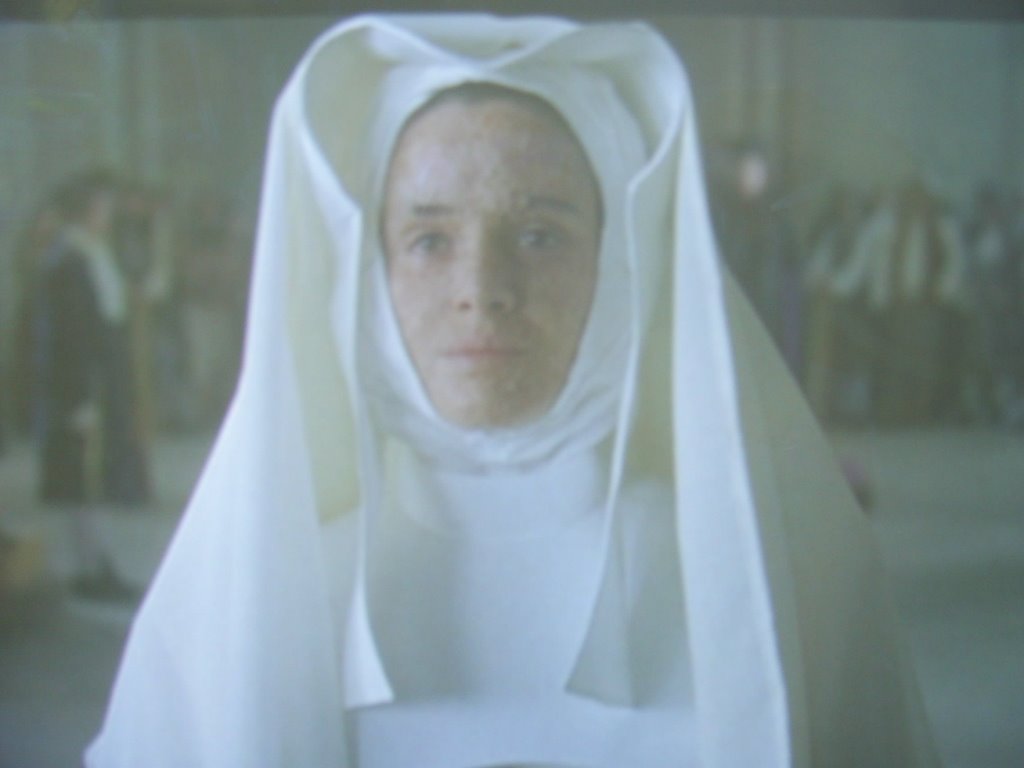
In the 2004 film production of Thornton Wilder's Bridge of San Luis Rey, there is a moment that stands alone in beauty and depth: the words, the scene, the faces of the actors, the looks captured; to me, this moment is the true flowering of the story.

The original book, to which this production is said to be 'slavishly' correct, is a story about a priest in eighteenth-century Peru who witnesses the sudden fall of an ancient foot-bridge, path to a popular place of pilgrimage. Five people perish suddenly; and it so affects this priest, who has begun to fall into the doubting of those who wish to understand before they will believe, that he makes it a work of six years to find out either God's providential designs for these five, or whether this was random. The conclusion would be final: either God exists or the whole universe is meaningless, and with a definite foundation of tragedy and sadness. However, the very question was the unbelief; for those who will not see (seeing is an act of faith in the spiritual) are already blind.

The priest traces carefully the lives of each person who fell to their deaths that day in the heat of Peru, and he remains inconclusive. It is the author, Wilder, who tells the real story, the story that the priest could not get to in his digging. We begin to see that each of the five people who died had suffered for love, they were, in a sense, the penitents, the ones who had finally learned what love really was: not selfish desire, addiction, lust, not a life in a peaceful garden, not even the ties of blood. They finally understood that love was to let go of all these, to look out of oneself to the ones God has put in one's life, and to learn to love as Christ loved: from the pilgrimage of the road, teaching and healing; from the synagogue, fighting hypocrisy;from their homes, helping the widow and the orphan; from the Cross, killing sin and death. To love is to lose one's life for the sake of Love, watering the vineyard of the Lord with one's own blood. To love is to love Love Himself above all.

This understanding the five came to, and as a direct result of their loving this way, they literally lost their lives: but what, again, is the end of that verse: "If you seek to save your life you will lose it, but if you lose your life, you will gain it". The five lost their physical lives but gained something more: it is apparent from the threads of the story that the omniscient narrator tells, they had gained love; and their blood watered the lives of those they left behind.

The most important of those whose life was radically changed by the death of those on the bridge was La Perichole. In the years before the accident, she was a talented and vain actress who had caught the eye of the Spanish Viceroy of Peru. She bore him a child out of wedlock, and was certainly on her way to perdition. But, in His mysterious way, the Lord had designs to save her, and the first deep knell heralding this redemption was her falling ill of smallpox. It destroyed her beauty and the surface sin of vanity began to be eradictated from her soul. The man who truly loved her, albeit imperfectly, came again and again to see her in her recluded state. She finally allowed him to take her son to Lima so that he could be educated. On his way, her friend and her son were two of those who died on the bridge.

La Perichole finally appeared at the convent in Lima, a broken and contrite woman, a woman ready to recieve Christ into her life. In the years that the priest was searching out God's providence in the fall of the bridge, La Perichole was living it. Living God's providence, finally understanding love, she was now "Sister Camilla".

The moment of beauty in the film comes when Sister Camilla appears at the court arranged by the Bishop of Lima and presided over by the very Viceroy with whom she had sinned. She comes into the court to give evidence in this trial of the priest, who is charged with heresy for trying to systematize and prove God's providential design (ignorantly trying to destroy a need for faith and make heaven on earth).

Sister Camilla flows into the court, her whole body and head veiled in a white-cloud habit, and stands easily and gracefully on the witness platform. The bishop asks the Mother Superior accompanying her, "Is this the woman who used to go by the name of La Perichole?"She answers in the affirmative and when Sister Camilla is asked to remove her veil to make sure, the Mother tries to vouch for her identity. The Bishop makes disparaging remarks about the honesty of a former actress, and without self-defense or reply, Sister Camilla removes her veil, revealing a horribly scarred face. The Viceroy winces, and the Bishop bids her step forward, asking the Viceroy pointedly if he recognizes her: after all, he knew her the best.

Sister Camilla steps forward, and looks up at her former lover, the Viceroy. To the shock of the court, he says after studying her face, "No. No. I do not recognize this woman. For all her passion, La Perichole had no love in her eyes."

Sister Camilla looks at her former lover for a moment, her eyes full of peace: and love: and forgiveness, for as some saint said, "Where there is true love, forgiveness is already there." She replaces her veil over her face, which despite all its scarring, has grown truly beautiful: beauty where before was only sparkling, hard charm.

Is this not the moment of God's providence? Are not those of us with scarring able to look yet beautiful, an eternal beauty, a spiritual beauty, a piece of heaven shining through the charred remains of our sin?

As the Sister leaves the courtroom in silence, the Mother Superior stops and says, "Those who will not see are truly blind."

See, oh see, the greatness of the Lord, see Him in all things, great or small: see Him in the sadnesses and storms, see Him in the calm and joy: for He is Lord of them all. May His face, a face scarred, a face of beauty in love, be our face; may His open side be the door by which we all enter His Kingdom.

Sunday, June 18, 2006

White Martyrdom


A thirty-something mom who likes classical and Gregorian is an unlikely candidate to connect with a Tool song: but I did. The song is 10,000 Days (Wings Part 2), and it seems to capture, at the root, the feeling one has when understanding finally something of the cost of martyrdom. The creative man behind this song is the son of a Christian mother who was afflicted with a stroke and spent the last 10,000 days of her life paralyzed. Her son, a rock star, with some pretty dark and disturbing songs under his belt, seems to come up for air because of her death. I don’t have a judgment as to his personal faith or not, but to me he captured something profound in this particular song. He seems to be shocked into realizing that she is now facing her eternity, and he cries to God in this song for her salvation: he rages, how can she, who loved and suffered, deserve anything less than the greatest welcome from God? How can He not give her soul wings?

10,000 Days starts out in a harmonic minor, and by bridges, slowly layers on other harmonies and finally a clamored melody (like a journey upward). Using the minor key (think of Jewish music from the captivities), but starting out with the sinews underneath, bare and vulnerable, seems to me to be less purely sentimental than akin to the deep suffering that undergirds life in the world; and accepting this as the providential disjunct between this life and the next is a fundamental part of martyrdom for the lover of Christ. Back to the song: Waiting for the melody, the following is sung quietly, bemoaning the fact that many of our churches are filled with those (-is it I, Lord?) who consider themselves saints and martyrs for Christ, but who are actually hypocrites of the worst order:

Listen to the tales and romanticize,
How we follow the path of the hero.
Boast about the day when the rivers overrun.
How we rise to the height of our halo.

Listen to the tales as we all rationalize
Our way into the arms of the Savior,
Feigning all the trials and the tribulations;
None of us have actually been there.
Not like you.

Ignorant fibbers in the congregation
Gather around spewing sympathy,
Spare me.
None of them can even hold a candle up to you.
Blinded by choices, hypocrites won't [seek / see].

But, enough about the collective Judas.
Who could deny you were the one who
[would have made it, / illuminated]
You'll have a piece of the divine.

Another layer of rhythmic harmony, in the minor, but higher on the scale and lighter, is added at the the end of this small verse and the song takes a heavenly turn, almost a turn from resentment to hope:

And this little light of mine, the gift you passed on to me;
I'll let it shine to guide you safely on your way,
Your way home ...

In the next section, he speaks about the lights going down- the loss of a suffering servant, those who are marked by their love and patience and fidelity to Christ in the midst of great trial- that this loss will leave those with little or no faith at the mercy of the inevitable judgment of God. The music echoes this by the entrance of a new and demanding rhythm from an electric guitar, but as yet still soft and in the distance. At the line, “You’re going home”, the song again takes a turn and we begin to hear a hint of the only melody, a real cry of anguish from the heart of the son left behind:

Oh, what are they going to do when the lights go down
Without you to guide them all to
Zion?
What are they going to do when the rivers overrun
Other than tremble incessantly?

High as a wave, but I'll rise on up off the ground.
You [are / were] the light and the way, they'll only read about.
I only pray, [Heaven / God] knows when to lift you out.
Ten thousand days in the fire is long enough, you're going home
.

Here the son lets loose the blood-gorged prayer of one who has seen a martyr but as yet does not trust God to take care of her; but understands subliminally both her and his position as penitent and supplicant before the Face of God. I resonate with the cry in the lines, “It’s my time now! Give me my wings!” Although cloaked in demanding language, I find the arching intensity of the music, and the guitar above beginning the melody, the exact representation in music of the intensity of both a martyr’s desire and thirst for God, and the lesser soul’s awe at the work and mystery of the Lord in the life of a suffering soul ascending:

You're the only one who can hold your head up high,
Shake your fists at the gates saying:
"I have come home now!
Fetch me the Spirit, the Son, and the Father.
Tell them their pillar of faith has ascended.
It's time now!
My time now!
Give me my, give me my wings!"

Give me my wings!

You are the light and way, that they will only read about.

Should we all not live, at the deepest levels, in this intensity, and thirst for the Living God? Can we desire something less and be truly human? We can only do this by making the capacity inside ourselves for God, who will then fill us with His torrent. Then we live as martyrs, white and red. A red martyr is one who we are most familiar in story- the ones who gave their lives for Christ by shedding blood. A white martyr is one who, like this singer represents his mother, as accepting suffering, accepting loss, accepting God’s will as over and above their own with love, but to the point of death: internal, unseen, but death nonetheless:

Set as I am in my ways and my arrogance,
Burden of proof tossed upon the believers.
You were the witness, my eyes, my evidence,
Judith Marie, unconditional one.

Daylight dims leaving cold fluorescence.
Difficult to see you in this light.
Please forgive this bold suggestion:
Should you see your Maker's face tonight,
Look Him in the eye, look Him in the eye, and tell Him:
I never lived a lie, never took a life, but surely saved one.
Hallelujah, it's time for you to bring me home.

A white martyr, like the priest-saint who gave his life-blood to hear confessions many hours a day for many years; the nun who desired to die a thousand martyrdoms-and did so all within the pastoral walls of her convent in the daily giving over of her will to Love; the woman who prayed her husband and her children into sanctity at great loneliness and cost to her own dignity- the list goes on and on. We read these stories with some tremulousness and awe, but at a certain distance, as if a wall of glass separates us from these silent sacrifices of love, these heroic sacrifices. Only when we begin to desire to have the capacity for the love of God does He begin, gently, and perfectly contoured to our weaknesses, show us the immensity of any martyrdom; that death is death- of the self or the body. But no martyrdom is true that is not born of –simply, love- and love at an intensity that 10,000 Days portrays. It is that pounding thirst of the doe at the stream, the hunger of Christ for souls- the baptized eros that colors and warms charity. For to give your body to the flames, without this Love, is worth nothing. It would be the stupidest thing I can think of to do. May God preserve us from that.

Rather, it is the angst of seeking the Beloved in the cloud, the handing over of one’s will to Him in the silence and darkness, with no word spoken, no prenuptial agreement, no deposit-guarantee. It is to love, to give oneself because of deep, passionate love for God. The secret is that we could not have this but that He loved us first. He watches ardently at the gate for the approaching soul. He looks for us to have courage, and to cultivate strong desire, which are the necessary preparation for real love to take root: and then martyrdom for love of Christ and the souls He loves- the greatest thing we can, each of us, do.

In these light and dark swirled days of ours, we will most of us, be called to some penultimate moments of white martyrdom: for the sake of truth, or purity, or protection of the innocent. It will only be fruitful in love, love for God and the other. Fruitful in the sense that we do not necessarily know, in this life, what our sacrifices of love and will have done, like a providential wind blowing seeds. I do know that it becomes difficult to look at ten thousand days, or fifteen thousand, in this restless world, searching for the Lord through the dark glass. St. Paul says that we wish to exchange our earthly tent (body) for the heavenly one; but that those who are holy wish to stay or go, as the Lord wishes. This is love. But it doesn’t make the thirst less, but the thirst in itself has its own consolations; and I believe the Lord delights in consolation of His children. I understand now St. Therese’s desire: I want to spend my heaven doing good on earth. To be able to love, deeply and freely, to be allowed some small part in the salvation of others (Christ’s gift).

Yet how can I, like Tool’s writer, make this bold suggestion? In my small, white martyrdoms, I see how weak I am, how narcissistic: but I can hope, and all, all of this is my romance with the Lord. Religare, the root word of religion, means to ‘be tied to’. To be tied to something is to be constricted, and everything on this earth would constrict for ill if we tied ourselves to it- but many of us do. The glory and power of God bursts out clearly, like a pole of light piercing and destroying darkness, when we know that to be tied to God (or tied for the sake of God) is to be tied like as to a life-cord, pulling us up out of the frothing sea; to be tied to God is to be pulled to freedom and love. The Catholic Faith (religion) is the cord, martyrdom the weight of Love.

Monday, June 12, 2006

Epilogue to Salt


In the year or so since writing about salt and the Jews, I have had some thinking moments-on this subject. I recently read an article asking the question, “Who are the Jews?”- and this brought me to read Romans, and also gave me a new focus in my reading of The Life of Christ by Ven. Catherine Emmerich.

Who are the Jews, who are they with whom the Covenant of Salt was made? Are they the occupants of Israel, the somber families in black clothing in the Bronx? I suppose the very questions reveal some new confusion in my mind; but a very big clue tugged at me in my reading about the meeting of Our Lord and Nathanael. “Ah”, said Jesus, “Here is a true Israelite, in whom there is no guile.”

I noticed here a few things. Jesus does not call him ‘Jew” or ‘Hebrew’ or ‘Semite’, all of which would have fit him. He chooses ‘Israelite’. St. Paul, in Romans, uses this term as well, and on an overview look, seems to make a differentiation by the use of the different terms. Both Our Lord and St. Paul seem to speak of ‘Israelite’ and ‘true’ as being connected.

It is said that Heber, the father of the Hebrews, was given a language that was different from all others, to make his descendents better able to live apart from other families, or races. Six generations later, Abraham was born into his line and Abraham’s faith became the stuff of future nations. Jacob, Abraham’s grandson, became Israel, the father and personification of ‘isra-el’, or he who struggles with God. It is true; he fathered a nation who struggled with God, like a child struggles to be born. In the providence of God, the connection between Himself and mankind was a national, racial one, although it seems that even at the early stages, people were grafted in, like Joseph’s wife.

This nation, in the desert, struggled with God and despite their weaknesses and betrayals, was allowed to receive the law, the first step in regeneration for all of us. They struggled with God and were sent into captivities. What were they at the time of Christ, at the time of St. Paul? Were there any left to hold God’s grains of salt?

Jesus rejoices in Nathanael as a true Israelite. He recognizes one who struggles with God, without guile: struggling can have two meanings, and the fullness of the saying is apparent in both meanings for a true Israelite. They struggle in the sense of allowing themselves to be yoked with God for truth and salvation, and in failures they fight with God and later plead from Him His forgiveness. Yet in all this struggle, they are without guile, or cunning and deceitfulness.

One can also see who the true Israelite is, inheritor of God’s promises, that Jesus is showing us- by whom he denounces as false. Although they call themselves Jews and Israelites and worship in the Temple and teach in the synagogue, although they claim to interpret the religion for the people, many of the Pharisees are full of guile, full of their own interpretations, full of their heritage and race- they reject God in person, instead of truly struggling. In reading Holy Scripture and books of the life of Christ, like Fulton Sheen’s or Ven. Catherine Emmerich’s, one can begin to put together a picture of what Christ was looking for. The leaders of a town, usually the Doctors of the Law or the Pharisees, would invite Him to a feast and He would say, “I have other hunger” and would go out to find those who were waiting for Him. Often this was the poor and the sick, but also included some wealthy people.

He looked for those who, as St. Paul says in Romans, were circumcised primarily in the heart: that is, the sign of salvation was in the disposition of the heart. He went among the Jews first, looking for “true Israelites in whom there is no guile” and to try to convert those whose hearts were hard; but of course, He knew where it was useless and where there was hope. At the end of His mission to the Jews, He begins to speak more openly of Himself as the Temple, a Temple that would be destroyed and rebuilt: Ven. Catherine Emmerich has a vision in which He says to the Pharisees of one town, “You are destroying the Temple, stone by stone, you are tearing it down with your own hands”; and she was given to understand that He was speaking mystically of the destruction of the particularly Jewish claim to salvation, the destruction of the Temple in Jerusalem, and the Crucifixion of God they brought about most directly.

Thus, in Romans, St. Paul speaks of the Israelite of the circumcised heart, the true Israelites. He is following on Christ’s words and example and on his own deep experience both as a Pharisaical Jew and as a true Israelite, who came to belief in his Savior God. He speaks of those Israelites who have been made jealous by the salvation of the Gentiles, those who God will come to save in the end: he says, “And all Israel will be saved.” There is much worth pondering here, because in the present age, where are the Israelites? It is not by color or pedigree necessarily: it is by the heart. This only God can truly see, only He knows where the salt will draw out the impurities before the end- that is, where the Church will be able to reach among those who call themselves Israelites. It is not for us to know now, and so we must reach out to all and call, “Come and see! I have found the Messiah!”

Resting on the stupid idea that the “Jews have their own covenant and we shouldn’t offend them by evangelizing” is failing the true Israelites.

Sunday, June 04, 2006

You Are The Salt of the Earth

A Reprint

A little more than two years ago, there was some furor in Catholic news circles about the claims of some bishops that "the Jews have their own covenant, they don't need to convert to the Catholic Church."

This shocking statement, in its various forms, must be making the Brothers Lemann laugh at the stupidity, or weep at the consequences. They were twins, born into a Jewish family in the later 1800's, and later converted to the Catholic Faith- finally, becoming priests and evangelists to the Jews. In fact, during Vatican I, they were trying very hard to have a document approved by that council which dealt with the desire and purpose of conversion to the Catholic Faith for the Jews. It is with irony that we look back at the statement made at the time that Vatican I was interrupted by WWI- "It is with great hope that the document prepared by the Frs. Lemann will indeed be approved by the council when it is again convened." When the Vatican Council was recovened, the world was shuddering under imminent social and moral revolutions, and the Vatican Council would become the least likely forum in which a document by the Frs. Lemann, advocating evangelization of the Jews, would receive approbation.

True, it would be very interesting to see how the Frs. Lemann might deal with the Jewish question of conversion after the horrors of both WWII and the revolutions that destroyed the entire fabric of societies- and possibly dragging the Church's worldly understanding of Herself and Her role into the smoke of the ruins. However, the passion of the Apostles, notably St. Paul, all the way down to the twin priests, the driving desire to help their brethren in blood to see the reality of the Messiah in the person of Jesus, is the same. No amount of historical events, as terrifying as they may be, could possibly account for the Jewish-convert bishop in Israel, who stated sometime in 2004 that conversion of the Jews was not necessary. This is not an organic change of thinking, it is not on the same spectrum, it is a radical departure. What is the rationale?

In my last post, I discussed the Covenants of Salt- one with the priests in the desert during the Exodus, and later with David. These covenants, because of the nature of the 'salt-covenant', are kept forever. Therefore because the Jews consider these to be proof that although God may punish them for millennia, He will never completely reject them. The idea of there being a New Covenant, or New Testament, which supersedes the Old, including the Covenants of Salt, is completely foreign and blasphemous to the Jews. And since the horrors of WWII, including the Jewish Holocaust, the establishment of the State of Israel, and the growth of Jewish power in media, politics and culture the world over, the question of Catholic evangelization to the Jews has become a hot-point for controversy and charges of intolerance, "old-time Catholic imperialism". "Anti-Semitism". The stance of the Frs. Lemann, or Fr. Fahey, that of the passion to convert everyone, but especially the Jews since they are the nation out of which the Lord came, is simply against the current of mainstream Catholic thinking since Vatican II. Opening wide the doors and windows to the world does not mesh with sending out the calvary to convert the Jews.

It is quite possibly and probably true that the Covenants of Salt are indeed forever: yet they were made between God and the Jews- He does not change, He does not break faith. That same God came to Moses in the desert as one friend to another, to David as a loving and disciplining Father, and then He came to the Jews through the immaculate womb of a simple Jewish girl, as was promised and foretold for hundreds of years. He came as a bringer and omniscient interpreter of the Law, and as the heir of David's kingdom. Indeed He came and at the same time, fulfilled both Covenants of Salt. But the Jews rejected Him. Yet the salt remains, neither could retrieve the salt from the other's pouch, and so even in an attempt to reject Him and thus break the Covenants, the salt says: "No, you cannot break this covenant. It is forever."

Does this mean, then, that the Jews have their own covenants with the Lord, and that they will be saved regardless of our converting them? It is true that St. Paul tells the Christians in Rome, "I say then..Hath God cast away His people? God forbid, for I also am an Israelite of the seed of Abraham, of the tribe of Benjamin... God has not cast away His people, which He foreknew ...I say then, have they so stumbled that they should fall? God forbid. But by their offence, salvation is come to the Gentiles; that they may be emulous of them. Now if the offence of them be the riches of the world... that blindness in part has happened in Israel, until the fullness of the Gentiles should come in. And so all Israel should be saved, as it is written...For the gift and calling of God are without repentance. For as you also in times past did not believe God, but now have obtained mercy, through their unbelief; so these also now have not believed, for your mercy, that they also may obtain mercy"(Romans XI).

We do not know what is in God's mind concerning the Jews. But He is the same God as did die on the cross at the hands of His own, and they will know Him as the Messiah with certainty someday. So why would we not be called, as always, to convert them to the God to Whom they will most certainly recognize before the end of the world? And I think it is of course no accident that Our Lord said, "You are the salt of the earth, if this salt loses its flavor, it is of no use but to be thrown in the fire."

The salt of the earth. The mineral that keeps the heart beating, that preserves, that purifies, so precious and so necessary to life. It was salt that enabled the ancient Hebrews to stop being a nomadic people, a people moving along with and depending upon the herds for sustenance, for salt is necessary to the body for life. Meat carries its own salt; but with the possession of the mineral, the nomadic Hebrews were able to settle and provide their own salt, seasoning foods grown in the fields.

We, the ragged beggars hauled from the streets to the banquet of the King because His own people would not come, we are the salt for the world, and I think, for the Jews. We are, as St. Paul says, "to make (the Jews) emulous"- of the salvation given us by the King of the Universe. We are the intermingled grains of the Salt Covenants, grains provided by God, which cannot be recovered, because we are spread out throughout the earth, and therefore, we are in some way the keepers of the Covenants: we are the grains of salt, not inert, but alive and with the flavour of passion for Our Lord, the Messiah.

If we lose that flavour, that passion to have all know Him as their Saviour, if we opt out of our calling to preach to all nations, that desire and thirst for souls, Jew and Gentile alike ( "In Christ there is no Jew or Gentile"), then we have lost our flavour as salt and are fit for naught than the fire. We must evangelize in season and out of season, in times of ease and times of persecution. Woe to those shepherds who not only lose their flavor, but discourage others from evangelization.

Sunday, May 28, 2006

The Unbroken Covenant, Koshering Meat, and Salt

A Reprint

Deep in the recesses of the home, a Rabbi stands and observes the process of koshering meat. He is but one link in a chain of watchful, careful observance- from the time the animal is innocently chewing its cud in the gentle, high grass, to the time of leading by the rope to the place of slaughter, to the time now when the meat is having its blood drawn out to clean and purify the flesh. The Rabbi watches intently as the pearly-white, tiny pebbles of sea salt are rubbed into the surface of the meat, and the butchered animal is slowly transformed into clean nutrition for the community. The salt begins its important work, pulling the blood into itself and bleaching it so that it is changed in its essence. The salt leaves the meat different than it was, makes it able to be used not only to nourish the bodies of the family, but to nourish the liturgy of faith, to incarnate the metaphysical truths and the remembrance of a saving God. The shadows fall over the Rabbi’s face as he smiles at the family leaned over in attention at the process, and turns to step out into the bronze light of late afternoon.

As the Rabbi shields his eyes from the diffused light of sunset, he picks his way among the crowds of the market, making for the cool peace of his own home. He sees salt again, the piles in the bins making him feel suddenly thirsty; salt seems to be pressing in on his consciousness. He gives into its demands, and starts ruminating: salt, that spice that is not a spice, alone a mineral in the spice markets, its very color demanding attention, its very properties of bleaching and helping to keep the heart beating, drawing other substances into itself and changing them forever; its association with the primordial environment of the sea; its special and essential job of preservation. Thinking of preservation, other images crowd into his mind: the furtive look back of the wife of Lot and the resulting woman-pillar. What a beauty of horror she must have looked, her longing expression and the clutching hands, the delicately flared nostrils in the purity of white; the weeping of her daughters surrounding her form like the whispering of the angels; and the whitened flats near the sea that were once Sodom and Gomorrah, nephillim-sized white plates of sulphur and salt. He thinks of Lot’s wife, standing until her form fell back, piece by piece, into the earth, a brutal reminder that too much attachment to the things of this world is the herald of death, and that God’s wrath is not to be taken lightly. The Rabbi feels the slight fear of the encroachment of another world, of the Other; and as he shivers slightly in the warm, pink air of languid twilight, he remembers also the humble prescence of preserving salt, functioning symbolically in the Covenant of Salt between God and Jacob’s children in Numbers 18:19, the covenant that will last forever.

In time immemorial, men would meet, facing eachother across the dancing flames, and amongst the patter of soft words, one man would rise and take some of the salt from the pouch kept around his belt. Hand held out, with the precious mineral cupped in his palm, he ceremoniously pours the grains into the pouch of the other man. Then the other man would do the same, their salts intermingled and impossible to separate. If one of the men came later to ask to break the covenant, he would be met with this saying: “Yea, it can be broken only by retrieving each of your grains of salt from my pouch”. Impossible. It was an unbreakable vow, much like the making of a child.

In the far reaches of the history of his people, the Rabbi knew that the true God had made this same covenant with the priests of Israel: that they may receive a portion of the gift-offerings the Israelites brought to the Lord of Hosts. This was in the time of the desert, when the temple was new and was nomadic, when Moses had to veil the brightness of his face and Aaron’s budded staff still lay in the temple recesses; when the Lord came to Moses’ tent as an intimate friend who wishes to speak openly, and all the Israelites, seeing the cloud descend on the tent, would rise, stand and fall prostrate at the entrances to their tents, facing the tent of the Lord’s visitation.

The Rabbi’s face grew bright, a pale remembrance of Moses’ face, as he lived for a minute or two in that glorious history and remembered the brightness of the Temple in Jerusalem, with the priests like bees coming in and out of the entrances. Then the Covenant of Salt remained, it was unbroken. But where is the reality of that Covenant now? The Temple suffocated underneath the soils and buildings of later ages, the Mercy Seat hidden in some mountain cave, the Ark perhaps sleeping in the earth, the priests flown and scattered like the rest of the Israelites: these were dark remembrances- where are God’s grains of salt? And ours? Until each grain is recovered, the covenant stands, like the covenant with David, “that his kingdom will remain in his line forever”. And we Israelites, were we not called “a nation of priests”- was not a covenant made with the priests, as our representatives, was it not made for all of us?

The sun gathered the ends of its robes and passed down to the other side of night, and the Rabbi did likewise. His door closed softly with a melancholy sound, a muffled sigh in the dark.

Many miles away, the sun was just rising and prodding at the temples of a priest who looked up, extinguished the tallow candle on his desk, and bent down again to write:

So you wish to stray and be lost?
How much better I do not also wish this.
Certainly, I dare say, I am unwelcome. But I listen to the Apostle who says: "Preach the word; insist upon it, welcome and unwelcome." Welcome to whom? Unwelcome to whom? By all means welcome to those who desire it; unwelcome to those who do not.
However unwelcome, I dare to say: "You wish to stray, you wish to be lost; but I do not want this," for the One whom I fear does not wish this. And should I wish it, consider his words of reproach: "The straying sheep you have not recalled; the lost sheep you have not sought."
Shall I fear you rather than him? Remember we must all present ourselves before the judgment seat of Christ.
I shall recall the straying; I shall seek the lost. Whether they wish it or not, I shall do it.”*


He was thinking hard, to the point of sweating, on his sermon for Holy Mass the next day. In the child-light, the cheerful brightness of the morning, the sheen of perspiration made him look pearly-white, yet earthy and not transcendent. But this belied the man’s spirit, for he was aflame with the love of his Master, rejoicing as each word fell on the paper, like so many drops of blood. It was if the sweat of his prayer of the spirit, the never-ending prayer enjoined upon him by the words of St. Paul, purified and cleansed him, and left him as both nourishment and purifier of the flock entrusted to him.

“You are the salt of the earth”, the light of the sun said as it caressed the face of the concentrating priest.


*St. Augustine, Sermo 46, 1-2: CCL 41, 529-530

Sunday, May 21, 2006

Tony


The picture is at ten percent. There he is, a figure among many, slivered in the crowd before Mass begins, and yet my eyes fall on him in particular. I suppose it is because he isn’t quite like the others. There isn’t the cake-beater business of the mothers in their unused heels, or the cowboy-nonchalant air of the single men, or the deer-in-the-headlights look of the single women: instead, this man shuffles, and looks down; his clothes are dark and non-descript, his feet like lead upon the dirt in the parking lot.

The picture is now at thirty percent. I notice now that he is shuffling and looking down because he has a little hand in his own. He is taking care of a little child; but intuitively, you can tell he is not the father, because he is taking such care with just this little one, as if this tiny blonde boy were the only child left in the world, the air of a 'special job'. I notice now, too, at this closer range, that he has a large growth above the right eye, like a dark brown cauliflower; this gives him a tree-like look, and I feel slightly repulsed. But the child looks at him with love and confidence.

The picture is now at sixty percent. He sees my little children, and slowly shuffles over with his small charge. “I’m Tony”, he says, “and this is William Thomas.” His clothes are warm in the warm day, and they are slightly dirty. Tony has a few teeth left, but he smiles a big smile nonetheless. There must be some second sight that children have, because my children respond gently and with security, like small flowers in the breeze. They don’t ask me about his mole or his teeth. He wants to show me the bay leaf tree, and smells it. I feel as comfortable with him as with the children; I am as warm inside as he must be in his warm fleece coat.

The picture is now at sixty-five percent. When Tony sees me the next time, a few weeks have gone by; but he lights up like an old friend. He is with the children again in the playground, and he tells me that he lives on the retreat grounds and is the nanny for the children. He smiles, not proudly, not in any way. Just smiles. He brings picture books for the children in church, who are suffering through each minute: after all, they have no sense of when all this sitting and standing and kneeling will end. They don’t know what a minute is, and Tony knows that.

The picture is now at sixty-eight percent. Tony wonders why we aren’t always there on Sunday, but he makes no judgment. He acts toward me and toward the children as he always does; the funny thing is, he does not seem to interact with certain people- it seems the more cowboy-nonchalant or beater-business, the less.

The picture is now at sixty-eight point five percent. I know that I know very little about Tony; for instance, why did he lose his teeth? But what I do think is that he is a Little One, there is a certain light around him, like white glow of the lamb in the green field, innocently standing out next to the large, off-white and black sheep, creatures full of their wool and their purpose. I do know that he has nothing, no power, no ambition to speak of, but of service. And I believe (I don’t know if I am right or wrong) that he brings something of Christ with him, without his knowledge of it. I do know that he seems to be at the top of the Right-Side Up Kingdom in this upside-down world.

I will never reach one-hundred percent, not ever. God only knows a person so well. It is like the problem of parallel lines in Euclid: the closer they get, the farther one is to calculating where they meet- and you are told that they never come together, else the whole structure of geometry must change. But perhaps, God's universe is truly Lobachevskian, in that the parallel lines do, finally, meet: in eternity. And there I hope to rejoice in Tony's glorious court.

Sunday, May 14, 2006

To My Shepherd


The following is a real letter written by a parishioner whose family roots in the local church run generations deep. He writes in response to an edict by the local bishop. Names and place names have been taken out-but unfortunately, this beautifully written letter could be apropos in many dioceses around the country.

Dear Bishop,

Our parish bulletin recently has published your order that we may no longer kneel at the “Ecce Agnus Dei…” or upon returning to the pew after receiving communion. It seems that another cherished and permissible custom of the people, of long and continuous practice, has been eliminated.

The publication of the notice included no mention of Cardinal Arinze’s Responsum of June 5, 2003. No supporting documentation, based on the authoritative teachings of the Church, as to why it is a better thing to eliminate the continuous custom of kneeling at these times has been provided. While we are ordered to give up our cherished customs, you and the priests of the Diocese reserve to yourselves the right to pick and choose which liturgical norms of the Church you will follow. Your picture on the front cover of the February Diocesan paper is ample evidence of this.

We must not kneel at our accustomed times, but other Diocesan parishes are permitted to celebrate Mass without kneeling at all. In at least one parish the precious Body and Blood is passed from person to person at Communion and in other parishes the words of consecration are tampered with. You know this, and you also know that nobody is publishing explicit directives to stop these practices.

In our own parish, the use of chalice veils and communion plates is banned. Priests refuse to genuflect at the consecration, others leave the sanctuary for the Kiss of Peace at every Mass, unapproved liturgical texts are continuously used, the people have been told not to make the sign of the cross at the end of the Penitential Rite, the Gloria can be chanted only once a month, and then only on the first Sunday of the month at 11:00 am. Extraordinary Ministers of the Eucharist appear at every Mass. The sacred vessels are rarely if ever purified by the celebrant. Except for an uprising of the people, the altar bells would have been eliminated some years ago.

The Sacrament of Confirmation has been a real trial for us. Through approving remarks and explicit directions, you and your Office of Divine Worship, in cooperation with Diocesan trained catechists have taught our children that they shouldn’t genuflect before the Real Presence, (bowing is the current fad), rock and roll and rap music, modified liturgical texts, and clapping and whistling are all appropriate to the Sacrament of Confirmation. You refuse to meet with concerned parents to discuss the matter. Even as many of you near the end of your active ministries, you, your Office of Divine Worship, and your priests, have the audacity to place yourselves between our children and their parents. You actively pursue the destruction of the last vestiges of the customs and spirituality that our families have handed from generation to generation for centuries.

Your generation is the generation that taught my generation. You taught us that with the advent of Vatican II, the dark veil of rigid authoritarianism, blind obedience, and silly guilt inducing rules had finally been lifted from the Church. We would all experience a great age of enlightened spirituality and unity based on freedom, diversity and respect for local customs. No more medieval European chains would bind us. No more fish on Friday!

And what of your legacy? You, your priests and administrators leave the scene disrespecting popular piety and family traditions. Diversity is a cover for disobedience. Tolerance does not extend to those of a traditional mind, who only ask some space in the Diocese, in the same way that space has been given to groups of various cultural and gender identities. You and your priests use your status in the Church to induce obedience to silly rules disconnected from tradition and reason. In the end, you leave us with the one thing that your generation claimed to hate most – blind obedience, supported by guilt. Except for blind obedience and the guilt associated with not following your directives, how else can we stand when our hearts and souls tell us to kneel?

In time, a new Bishop will come to our Diocese. If he comes to our parish, he may see everyone standing at the times you have mandated. But there are things he will not see - he will not see that some are standing because they don’t believe there is any Real Presence to kneel before, some are standing physically but kneeling in their hearts and souls, some stand so as not be ostracized as troublemakers, and others are standing for no particular reason other than the fact that everybody else is. The new Bishop will not see something else – he will not see the parishioners who are in the neighboring Diocese for an Indult Mass, or those who tragically have gone to independent chapels or who have simply given up and go no where at all.

The new Bishop will not be able to see these things, but he will see clearly that if the people were acting within the context of organic liturgical development, firmly grounded in the Tradition of the Church, you would not have had to issue edicts to force your personal vision of the liturgy on us in the first place.

Sincerely,

A Catholic

Monday, May 08, 2006

The Right of Love


Today, as I walked beside You, I heard You, teaching me to find You inside, in that place where I rest on You. And I saw it as a work, but a work of love. I thought of Mother Teresa, who always rested in You, by resting in Your Mother’s arms: she said the Rosary, nonstop, through luncheons, through plane flights, through the streets of Calcutta. I thought of Our Lady, and St. Joseph, in the heat and idolatry of the Egyptian cities, in Nazareth, in Jerusalem. Our Lady at Calvary, I thought of her, always resting with You, even in distress. And I thought about how much lower I am than that, than any of Your saints. How can I face the Cross like she did? How can I embrace it with Christ, like she did? I am not of that delicate, yet strong constitution: the constitution of the Virgin, with a heart always with You and in submission to You, a heart always trusting, never wavering, even in the viscitudes and waves of this life.

Then I heard it, inside-like: “Call on the Right of Love”. The Lord God Himself has said He loves us, loves us. And that love, love itself places incredible obligations on the Lover. It is to will the good for the other, to always be there: and in the ineffable greatness of God, to raise us up far beyond what we can imagine or even begin to do ourselves.

“You have the right to call on Me, to ask with all confidence for Me to make you a saint: to make your heart like Mine, to give you grace beyond measure, to do all, to raise you up to your Father’s embrace: this, daughter, this is the Right of Love.”

So, filled with joy, I called on Him in His Own Name: my only confidence is His Love, and the obligations of it that He has bound Himself to: to be a saint, to be so on His strength, for I have less than none (I am a fickle creature); to be made worthy by His worthiness. To be afraid only of what He wishes me to fear.

And He does all this while never truncating our free will. It is a balance so delicate that only God could conceive it.

My heart was bursting! All my life, I have heard things like I’ve just spoken of: He loves us, we can do nothing, etc: but I was fingering a dark wall, never feeling the edges of the door. Today, suddenly, the door was opened from the inside, and light flooded my dark soul. The Right of Love; an Eternal Lover who has bound Himself time and time again to His creatures by Love; it is there, everywhere, for all to see, repeated and shown in a myriad of ways. It seems to me that it requires only a desire, a small, even clumsy, movement of the will to set all aside in order to find Him. Then, in His time, you find that He has been all around you, all along, like an eternal embrace.

How I love Him: yet my love means nothing without Him: and He has given Himself to me, to all of us, and within the Right of Love, to make us His beloved, His saints. The door in the wall is Christ; and the Right to Love is the willingness, the cords of obligation that makes Him a door for us.

He is the Way, the Truth and the Life.

Thursday, April 27, 2006

Eight Years On


I've known you, really known you, for eight years now: for you never really know your husband until you've married him, until you've ironed the five thousandth shirt, or you know exactly which animal he looks like at any given moment (this morning it was a horse looking at you right before you put his saddle on, ears pinned back and pulling the eyes sideways). You only know him when you know that eventually, he'll figure out what really moves you.

I only think marriage begins, really, really, at the seventh or eighth year. Just when a lot of people really feel like getting out of it: the irony is that it is just really beginning to root in and grow. Perhaps if one wants to get out at that time, it means that you were never really in it for the right reasons. The great secret is that you can decide to now have the right reasons. Real love is that tough.

You were tough when I first met you, a modern knight on a creaky used bike at St. John's. You were so fun to watch, streaming like a flag past everybody on the football field, like the flagman in the calvary; and best yet, your flag had the cross on it, a real cross, a crucifix, not like the stupid sterile "resurrection cross".

Who cares if your zeal was part of a wounding? I saw you, as real love allows a true vision that others cannot see. God gave me that vision, which has carried me through. Who cares if you totally pissed off my whole Protestant family with very tactless Catholic proclamations? I knew it was done out of love, real love, and that they'd just never experienced that in our tactful world.

You were always honest with me. You came along, like a cold shower, like a fresh antiseptic on my wounds, and whipped me into shape.

How I have loved you, but I never felt so clearly until eight years on. Perhaps it takes that long, perhaps it takes 4,204,800 minutes of hoping and going up and down. My mother says it takes forty years, that the golden years are really about the marriage at that time of its day when the sunlight is slanted, making a beautiful, soft glow enter into every part of it.

I suppose then, you and I are still in the morning. But you've been my friend, my enemy(when I was bad), my cross (when I was good) and my fellow traveler towards heaven. Your weaknesses and wounds have been put up against my strengths, using them up to help you heal: and my weaknesses have challenged your strengths.

So marriage, eight years on, is like when you wake up after the first couple days of a strenuous hike, and your muscles are finally clueing in, and have given up screaming. It is when the sun hits you and you smile, and you know that without Our Lord, without the Blessed Sacrament, Our Lord present to us in the Eucharist, without Confession, without fellow Catholics and fellow lovers of Christ, without our families, our parents, our children, without all those gifts-the most important is Our Lord Himself- without Him, we wouldn't have made it home in the same plane from the honeymoon. You know that you are generally a jerk, and so is he, but that God has big plans for you both, and the happiest thing is to see us getting there.

You know that when you're sitting on the couch at night, and three little heads are bopping up and down, you know that in that cacophony of child-noises, you can catch an eye, a blue eye, full of new wisdom, the wisdom of a young and brave father, and you can share a silent laugh at our attempt to say the Rosary.

Blessed be God, in His angels, saints, and us.